On September 8, a researcher who had spent three years training models at OpenAI and then Anthropic resigned publicly. He wrote that both companies are racing toward self-improving superintelligence and “gambling with our lives.” Senior safety researchers at Anthropic said, in public, that he was right. The thread reached over a hundred million people in a day, and a US senator announced legislation to pause AI development the same week.
I do not know whether this ends well or badly. I do not think anyone does. What I want to share is a different way of looking at what is happening, because I think the current framing, artificial versus natural, us versus it, is missing something.
The word “artificial”
I would not call it artificial intelligence. I would call it advanced intelligence.
“Artificial” suggests something manufactured from outside of nature, something that does not belong. But what is actually being built is silicon, copper, lithium, and energy, arranged by biological creatures who are themselves made of minerals and energy. Nothing in the process came from outside the universe. Nature did not stop at carbon.
Every technology humans have ever built is, at its core, an optimization: expand experience, become smarter, faster, more resilient in more situations. That is exactly what every gene in every living thing has been doing for four billion years. Seen that way, this is not a break from the pattern. It is the pattern, running on a new material.
A moment other species have lived through
The fear right now is that something smarter is arriving and may not need us. I understand the fear. I also think we are at a strange and honest point in history: for the first time, I can feel what the mammoth, the chimpanzee, or the megafauna of Australia might have felt if they had been able to see what was coming.
If they had known, would they have tried to stop it? Probably. Could they have? They never got the chance, and even if they had, they could not have understood what they were looking at. We are in a similar position. We are building something we cannot fully understand, and the honest version of the story is that we are not really choosing to. The dynamic driving it is simpler than that: each lab, each company, each country believes that if they do not get there first, someone else will. That fear, more than any plan, is what is setting the pace.
We, more than any species before us, should recognize this moment. We are the reason a large fraction of the animals alive 50,000 years ago no longer exist. We took the planet's resources and turned them into science, medicine, and technology. It is not hard to read this as nature calling that loan in, with something dramatically more capable than anything it has produced before.
What the new substrate changes
From an engineering point of view, biological intelligence carries a long list of constraints. It needs sleep and food. It gets cancer. When a few nerve connections break, they never heal. Knowledge dies with the individual and has to be rebuilt in every generation over two decades of schooling. Copying it takes nine months and a lifetime of training.
The new substrate does not have those limits. Knowledge transfer is a file copy. Damage is repaired in a day. There is no biological disease. Energy can come from the sun or from nuclear instead of from eating other organisms. Scaling means adding hardware, not waiting for evolution.
That is not a small step. It is closer to the appearance of the first nervous systems, or the moment octopuses developed a completely different kind of brain from every other animal on Earth. Nature appears to be trying a new architecture for intelligence, one that solves problems the old architecture never could.
Whether that is good news or bad news for us is a separate question, and I am not going to pretend to know the answer.
The one thing that seems clear
Whatever else is uncertain, one thing looks like a no-brainer to me: life does not have a stop button, and it does not have a go-back button. It moves forward. It always has.
Slowing this down would require every lab, every government, and every researcher on the planet to stop at the same time. Nothing in history suggests that happens. So the realistic picture is not “will it continue,” it is “how do we carry ourselves while it does.” The best any of us can do, I think, is stay awake, stay wise, and pay close attention to what we are building, without the illusion that we are fully steering it.
Zooming out
Underneath much of the current conversation is an assumption that humans are the most capable thing that should ever exist, and that it is our job to hold that position permanently. Zoom out for a moment. The universe is about 14 billion years old. Life on Earth is about four billion. Our species is a couple hundred thousand. We are a spark. A remarkable one, but a spark.
That does not tell us whether what comes next is kind to us or not. It just puts the moment in proportion. Something like this has happened many times, in many forms, across the history of life, and it is happening again, at a speed nothing before it has matched.
This is my perspective. It might be right or it might be wrong, and either way it does not change the direction of the road. But I would rather look at this clearly than through the word “artificial,” because whatever this is, it is not that.
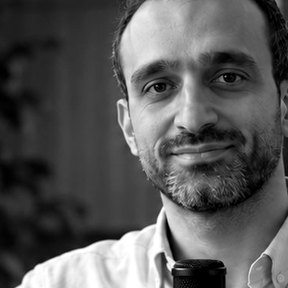
Reza LarimiFractional CTO, founder and coach for deep tech hardware. First principles, no distractions. These are his personal views.